
Sortation
WMS vs WCS vs WES: Where Robotic Sortation Fits in Your Warehouse Software Stack
August 08, 2026
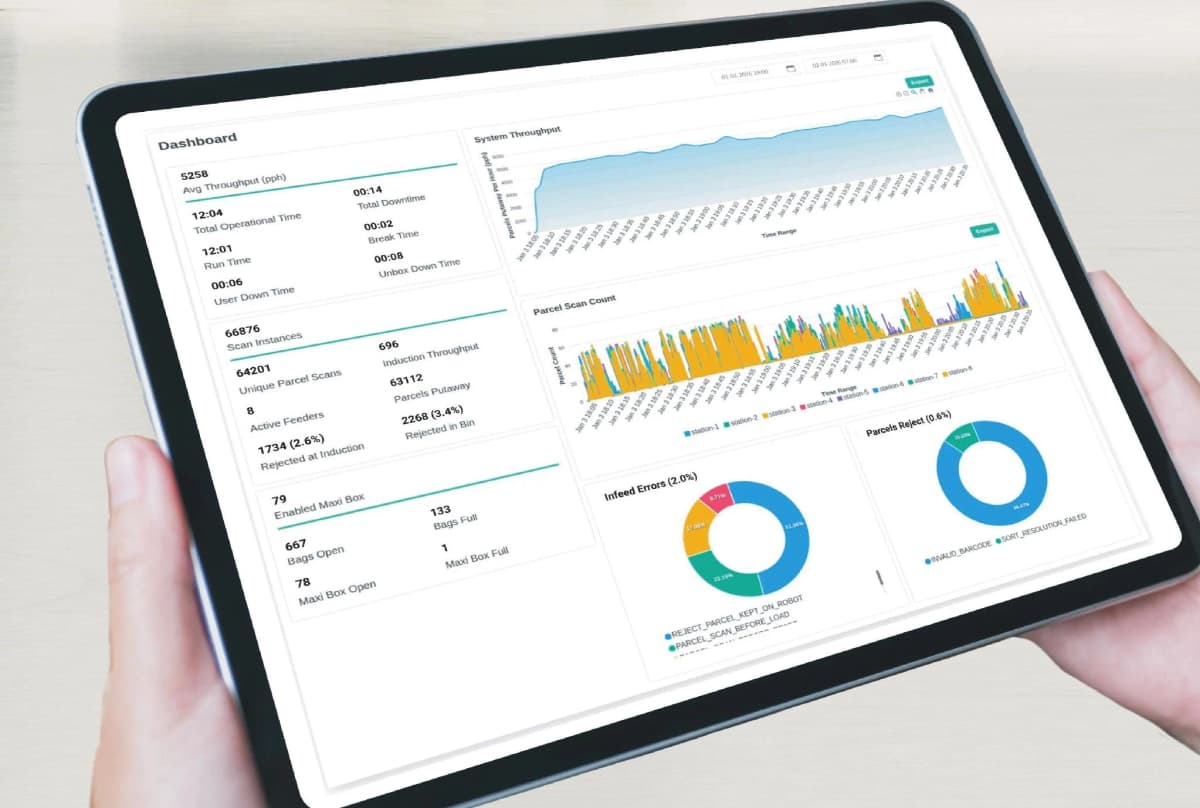
If you are adding automation to a warehouse, the hardware is rarely the hard part. The software stack is. Three acronyms show up in every vendor conversation, WMS, WCS, and WES, and they are easy to confuse because the lines between them have blurred over the years. Get the roles straight and integration becomes a plan. Get them muddled and you end up with two systems both trying to be the brain, which is exactly how projects stall.
Here is what each layer does, how they fit together, and the part most guides skip: where a robotic sortation system actually plugs in.
The quick answer
A WMS (warehouse management system) is the system of record. It knows what inventory you have, where it lives, and what orders need fulfilling. A WCS (warehouse control system) is the device layer. It talks directly to conveyors, sorters, and robots and keeps them running. A WES (warehouse execution system) sits in the middle and orchestrates work in real time, deciding what happens next and in what order. In one line: the WMS decides what, the WES decides when and how, and the WCS makes the machines do it.
What a WMS actually does
The WMS is the planning and inventory brain. It handles receiving, putaway, stock locations, order management, picking strategy, and labor planning. When a customer order arrives, the WMS is what knows the item is in stock, which zone it sits in, and that it needs to ship today.
What a WMS is not good at is split-second decisions on the floor. It works in orders and waves, not milliseconds. It was never designed to tell an individual robot which way to turn, and asking it to do so is where a lot of automation projects go wrong.
What a WCS actually does
The WCS is the equipment layer for the sortation floor. It speaks the native language of the sorting hardware and keeps it coordinated and safe. What that hardware is depends on the type of sorter: on a conveyor sorter it means PLCs, motors, and diverts; on a robotic sorter it means robot controllers, scanners, and putaway sensors. It handles the real-time, low-level tasks: read this barcode at induction, divert this parcel at this sensor, start this conveyor, route this robot around a jam.
A WCS is excellent at controlling machines but has a narrow view. It knows about the equipment in front of it, not the wider goal of the order. On its own it optimizes devices, not outcomes.
What a WES actually does
The WES is the layer that grew up to fill the gap between planning and control. It orchestrates and optimizes work in real time. Instead of releasing rigid waves, a modern WES sequences tasks dynamically, balances workloads across stations and robots, and reacts to what is actually happening on the floor right now. If one lane backs up, the WES reroutes work before it becomes a bottleneck.
This is why the WES and WCS increasingly ship as one combined platform. The WES makes the smart decisions, the WCS executes them on the hardware, and together they turn a static plan from the WMS into responsive, real-time flow.
How the three layers fit together
Layer | Core job | Time horizon | Thinks in |
|---|---|---|---|
WMS | Inventory and order management | Hours to days | Orders, stock, waves |
WES | Real-time work orchestration | Seconds to minutes | Tasks, priorities, flow |
WCS | Direct equipment control | Milliseconds to seconds | Devices, signals, moves |
The clean mental model is a chain of command. The WMS sets the goal, the WES decides how to hit it right now, and the WCS drives the machines that get it done. Data flows down as instructions and back up as status.
Where robotic sortation fits
Here is the question that trips people up. A robotic sortation system is not just hardware you bolt onto a conveyor. It is hardware plus its own control and orchestration software. In practice, a good robotic sortation system carries its own WES and WCS functionality inside it, because coordinating a fleet of robots in real time is exactly the WES-and-WCS job, and no external WMS can do it fast enough.
So the sortation system does not replace your WMS. It sits below it. Your WMS sends down the order and destination data, saying in effect "these parcels need to go to these routes." The sortation system's own brain then decides how its robots achieve that, sequencing, routing, and balancing the fleet in real time, and reports status back up to the WMS. You keep your system of record, and you gain a self-managing execution layer for sortation. The diagram below shows how the layers stack up.

How UnboxSort plugs into the stack
UnboxSort is a modular, AI-powered robotic parcel sortation system built exactly this way. It ships with its own onboard orchestration - the robot fleet coordinated by swarm intelligence, with WES and WCS logic that also commands every device on the sortation floor: racks, induction and scan stations, charging stations, and safety systems. Integration with your existing WMS happens through a single API, so your WMS stays the source of truth for inventory and orders while UnboxSort owns real-time sortation execution. You don't rip out your WMS. You don't bolt on a separate control system. UnboxSort receives order and destination data, handles millisecond-level coordination of robots and site hardware itself, and pushes sortation status back. That separation is why the system deploys in weeks, not months - and why scaling is as simple as adding robots, with no re-architecting of your software stack. For high-throughput e-commerce, 3PL, and courier operations sorting thousands of packages per hour, that's the difference between a system you install and a system you inherit.
How to avoid integration headaches
Three habits save projects. First, decide early which system is the source of truth for inventory, and it should almost always stay the WMS. Second, map the data flow before anyone writes code: what the WMS sends down, what comes back up, and in what format. Third, let the sortation system own the real-time robot decisions rather than trying to drive robots from the WMS. Respect the layers and the stack works with you. Blur them and you fight your own software for years.
The takeaway: WMS plans, WES orchestrates, WCS controls, and a modern robotic sortation system brings its own WES and WCS for the fleet while integrating cleanly with your WMS. Know where each piece sits and adding sortation becomes an integration, not a rebuild. If you want to see how this works on a real floor, book a demo with Unbox Robotics.
FAQ
What is the difference between WMS, WCS, and WES?
A WMS manages inventory and orders. A WCS controls physical equipment like conveyors and robots in real time. A WES orchestrates work between them, deciding what tasks run next and in what order. The WMS decides what, the WES decides when and how, the WCS makes machines act.
Does a robotic sortation system replace my WMS?
No. It sits below the WMS. Your WMS stays the system of record for inventory and orders, while the sortation system handles the real-time execution and robot coordination, then reports status back.
Do I need a separate WES or WCS?
Usually not. A modern and advanced robotic sortation system such as UnboxSort includes its own WES and WCS functionality for its robot fleet and integrates with your WMS through an API.
What if I already have a WES?
UnboxSort takes work from your WES the same way it takes work from a WMS. The interface is the same API, and your WES stays the arbiter across systems, while UnboxSort owns real-time execution on the sortation floor.
How does UnboxSort integrate with an existing warehouse stack?
UnboxSort connects to your WMS via an API, receives order and destination data, manages the real-time robot orchestration itself, and sends status back, so you keep your WMS as the single source of truth.