
Sortation
Solving the Variant Density Trap: A Practical Guide to Speed, Space, and Reverse Logistics in Fashion Fulfillment
September 14, 2026
By Michael Toy, Vice President Sales - USA
Fashion fulfillment has a math problem that most other categories never face. A single style might exist in eight sizes and six colours, which is forty-eight variants of one product. Multiply that across a catalogue and you get tens of thousands of SKUs that all look almost identical on the floor. Now add the other half of the equation. Apparel gets returned more than anything else people buy online. Put those two forces together and you get what we call the variant density trap, where high SKU proliferation and high return rates collide and quietly break traditional sortation.
The trap is expensive because of what it does to inventory. A returned dress is not just a logistics task, it is a depreciating asset sitting on a clock. This guide breaks down why velocity matters so much in fashion, how to handle dense sorting matrices without drowning in errors or labour, and why returns have to be treated as a high-frequency sorting problem in their own right.
The cost of dwell time
In apparel, time is not neutral. It actively destroys value. Fashion is seasonal and trend-driven, so a returned item is racing against a markdown calendar the moment it comes back. Research on time-sensitive products found they can depreciate by roughly 1 to 3 percent per week, and returned fashion goods can lose a large share of their value simply by languishing before they are processed.
The economics are unforgiving. The fully loaded cost of handling a returned apparel item, including shipping, inspection, and the markdown on anything that cannot resell at full price, runs around $30 per item, and only about 48 percent of returned apparel resells at full price. Every hour that a returned garment sits unsorted is an hour it cannot be resold, and in fashion that hour is pushing it closer to a discount it did not need to take.
This is the part leaders often miss. Sorting velocity is not just an operations metric. It is directly tied to inventory health, markdown prevention, and margin. Sort a return back into sellable stock in hours instead of days and you catch it while it still commands full price. Let it dwell and you have turned a recoverable asset into a clearance item. Speed on the floor is margin on the P&L.
Handling high variant density
The forward flow has its own version of the problem. When a facility carries thousands of near-identical variants, sorting becomes a complex matrix rather than a simple routing job. The same black t-shirt in six sizes has to reach six different destinations, and getting it wrong means a mis-ship, a customer complaint, and often another return.
Traditional approaches solve this by throwing either labour or fixed infrastructure at it. Manual sorting handles variety but scales badly, since more variants mean more people, more training, and more chances for human error under pressure. Fixed conveyor systems are fast but rigid, and every new sort destination means physical re-engineering. Neither copes well when your catalogue and your sort matrix change every season.
The better answer is a system that treats variety as a software problem, not a physical one. If the sort logic lives in software and the destinations can be remapped without touching the hardware, you can handle a dense, shifting matrix of sizes, colours, and styles without inflating either your error rate or your labour footprint. The goal is simple to state and hard to achieve with legacy kit: absorb more variants without adding people or square metres.
The reverse-flow imperative
Now the returns. Apparel is the most returned category in e-commerce by a wide margin. Clothing and shoes top the list of returned online purchases, and industry benchmarks put apparel return rates in the 25 to 40 percent range, well above the overall e-commerce average. For a fashion operation, returns are not an exception to plan around. They are a second, high-frequency inbound stream that never stops.
That reframes the problem. Returns are not a warehousing afterthought, they are a sorting problem, and a demanding one. Returned items arrive unsorted, mixed, and in unpredictable condition, and each one needs a decision: back to sellable stock, to a specific seller or channel, to inspection, to repair, or to liquidation. That requires agile destination mapping, the ability to route each parcel to its correct disposition on the fly, and rapid restaging so recovered stock rejoins the sellable pool before it loses value.
Handle that badly and returns clog your floor and bleed margin. Handle it well and returns become a fast lane that puts good inventory back to work quickly. In fashion, where the markdown clock is always ticking, that difference is enormous.
Where robotic sortation fits
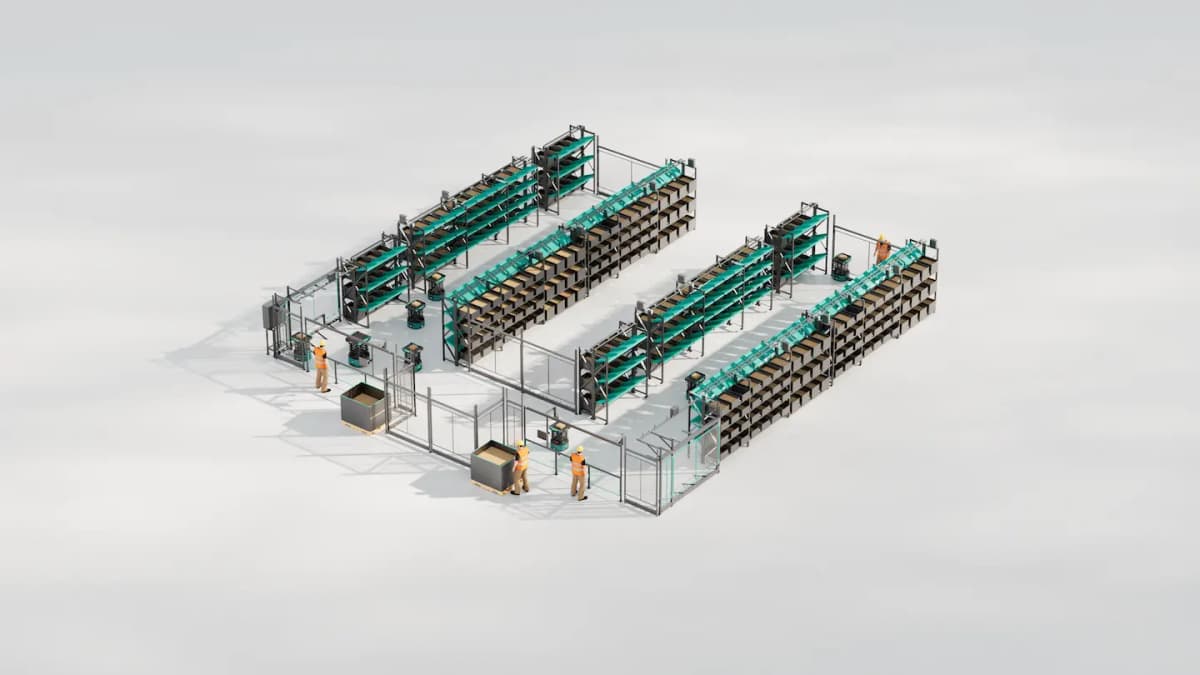
This is exactly the shape of problem UnboxSort is built for. It handles mixed SKU profiles out of the box, so a dense matrix of sizes, colours, and variants does not need special induction lanes or manual pre-sorting. Its sort destinations are defined in software, so you can remap them as your catalogue and channels shift each season without any civil work. For the reverse flow, it performs rule-based returns sortation, routing each returned item to its correct disposition in a single pass, then restaging recovered stock quickly. And because it fits high throughput into a compact, variable-grid footprint, apparel brands can run both forward and reverse sortation in the same building without adding floor space.
The takeaway for fashion fulfillment is this. The variant density trap is real, but it is a sortation problem at heart, both on the way out and on the way back. Win on sorting velocity and destination flexibility and you protect margin, keep returned stock sellable, and scale your catalogue without scaling chaos. If you want to see how this works for a high-variant, high-return apparel operation, talk to the team at Unbox Robotics, or explore the operations we already support.
FAQ
Why are apparel return rates so high?
Shoppers cannot try items on before buying, and sizing varies between brands, so fit and style returns are common. Apparel return rates typically run 25 to 40 percent, well above the overall e-commerce average, and clothing is the most returned online category.
Why does sorting speed matter so much for fashion returns?
Apparel is seasonal and trend-driven, so returned items lose value quickly, often 1 to 3 percent per week for time-sensitive goods. Faster sorting gets returns back into sellable stock before they slide into markdown, protecting margin.
What is the variant density trap?
It is the collision of high SKU proliferation (many sizes, colours, and variations) with high return rates. Together they overwhelm traditional sortation, inflate errors and labour, and turn returned stock into a rapidly depreciating asset.
How does robotic sortation help apparel operations?
Systems like UnboxSort handle mixed SKUs without pre-sorting, remap sort destinations in software as catalogues change, and perform rule-based returns sortation with rapid restaging, all in a compact footprint, so brands manage variety and returns without adding people or space.