
Sortation
The Injection Point Decision: Where Sortation Belongs in the Shipper-Carrier Handoff
September 25, 2026
By Michael Toy, Vice President Sales - USA
Zone skipping is one of the cleanest cost levers in US parcel shipping. Instead of handing every order to a national carrier at origin and paying zone-based rates all the way to the door, you consolidate parcels by destination region, move them together on a cheap linehaul, and inject them deep into the network close to the customer. On long lanes it works. Zone skipping typically saves 20 to 40 percent per parcel on zone 5 and higher lanes, often 3 to 7 dollars a package where you can skip three or more zones.
But zone skipping has a prerequisite that quietly decides who keeps the savings: the parcels have to be sorted by region before the linehaul leaves. Someone has to do that sortation. Most shippers pay a consolidator to do it rather than build it themselves, trading a one-time capital decision for a recurring margin they pay forever. That trade deserves more scrutiny than it usually gets, because the point at which it stops making sense is not fixed, and it is often quoted by the very people who benefit from shippers believing it is high.
1. The cost does not disappear, it gets priced in
The first thing to be honest about is that sortation happens in every zone-skipping model. There is no version where parcels reach the right injection point without first being grouped by destination. The only question is where that cost sits and whether you can see it.
When you use a consolidator, the sortation cost is inside their rate. You may never see it as a line item, but you are paying for their building, their labour, their equipment, and their margin on top. "We do the sorting for you" is not a free service bundled into a freight rate. It is a cost you have chosen to rent rather than own, on every parcel, every day, indefinitely.
2. Interrogating the volume threshold
The standard advice is that self-consolidation only pays above a certain volume, commonly cited as roughly 500 parcels a day to a single destination region before the economics work in-house. That number is not wrong, but it is not a law of physics either. It is the output of a specific set of assumptions about what sortation costs to stand up.
That threshold assumes conventional sortation economics: a fixed conveyor or tilt-tray system with heavy capital cost, months of civil work, and a large permanent floor footprint. Under those assumptions, you need a lot of daily volume to justify the build, so the break-even sits high. Change the assumptions and the threshold moves. When capital cost and floor space drop, the volume at which owning beats renting drops with them.
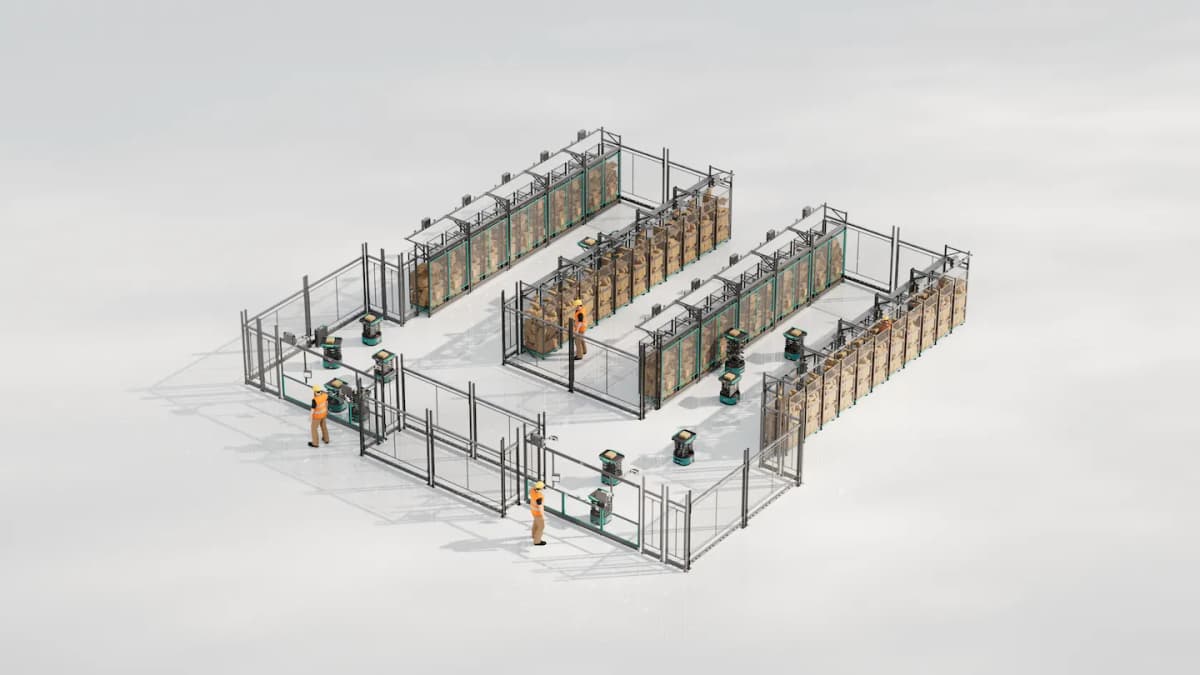
This is precisely where a system like UnboxSort changes the math. Because it is modular robotic sortation that fits into your existing four walls without fixed conveyor infrastructure, deploys in weeks, and scales by adding robots, it turns a large one-time capital project into a much smaller, faster one. That lowers the volume threshold at which a shipper can bring regional sortation in-house instead of paying a consolidator's margin on it forever. The 500-a-day figure is an artifact of old economics, not a fixed truth.
3. Where the spread lives
To decide anything, you have to see the whole spread. Zone skipping creates a gap between two numbers: the cost of the freight leg (linehaul plus injection plus the final-mile the carrier still charges) and the zone-based savings you unlock by not shipping every parcel across the full distance at parcel rates. The difference is the value zone skipping creates.
The real question is who captures that difference. When a consolidator runs the sortation and books the linehaul, they capture a share of the spread as their margin, and you keep the rest. When you sort in-house and inject directly, more of that spread stays with you. Neither is automatically right. The point is that the spread is real and finite, and every party in the chain is trying to capture a piece of it. If you cannot see the spread, you cannot know how much of it you are giving away.
4. Rate increases compress the decision annually
The build-versus-rent decision does not sit still. It gets more favourable to owning every single year, because carrier rates keep climbing. UPS and FedEx have now applied a 5.9 percent general rate increase three years running, and the headline number understates the real impact. Once you layer in surcharges, the effective increase for many shippers lands between 8 and 12 percent, with delivery area surcharges up 6 to 9 percent, residential fees climbing, and expanded dimensional and additional-handling triggers pushing billable weight higher.
Every one of those increases lands hardest on exactly the parcels zone skipping is meant to protect: residential deliveries into distant, higher-cost zones. So each annual rate cycle widens the savings from zone skipping and shortens the payback on shipper-side sortation. A break-even that looked like three years under last year's rates looks shorter under this year's, and shorter again next year. Time is on the side of owning the injection point.
5. The carrier's incentive to receive presorted volume
There is a second lever most shippers overlook, and it sits on the carrier's side of the table. A parcel that arrives at an injection point already sorted to the carrier's requirement is cheaper for the carrier to handle than one they have to receive, scan, and sort themselves. You have done work that would otherwise be theirs.
That is not just an efficiency, it is a negotiation position. Injection-ready, presorted volume is worth more to a carrier than raw volume, and that value belongs in your rate conversation. Shippers who can reliably hand a carrier clean, destination-sorted, injection-ready freight have a concrete reason to ask for better terms, because they are lowering the carrier's cost to serve them. Sortation quality is leverage.
6. Sorting to injection standard
All of this assumes you can actually sort to the standard an injection program demands, which is more exacting than internal sortation. Injection requires the right destination granularity, whether that is by regional hub, by zip range, or by carrier facility. It requires the right output format, whether that is bags, gaylords, or palletised groups. And it requires hitting a hard timing window against the linehaul cut-off, because a sort that finishes late misses the truck and the whole day's savings with it.
The hardest part is that the standard changes. A carrier revises its injection requirements, opens a new hub, or closes a lane, and a sortation setup built in steel around the old rules becomes a liability. This is the quiet argument for software-defined sortation. When destinations, groupings, and cut-offs are configured in software rather than welded into a conveyor, adapting to a carrier's revised requirement is a configuration change, not a rebuild. In a world where the injection standard is set by the carrier and revised on their schedule, the ability to reconfigure quickly is not a nice-to-have. It is what keeps the whole zone-skipping program viable.
The bottom line
Sortation is not a detail inside a zone-skipping program. It is the injection point decision, and it determines how much of the savings you keep. The cost is always there, priced into a consolidator's rate whether you see it or not. The volume threshold that supposedly keeps you renting is set by old capital assumptions that modular robotic sortation is steadily undoing. And every annual rate increase makes owning the sort a little more attractive than it was the year before. The shippers who win this decision are the ones who look past the quoted threshold and run their own numbers. If you want help modelling where your break-even actually sits, talk to the team at Unbox Robotics, or see the operations we already support.
FAQ
What is zone skipping?
Zone skipping is a parcel strategy where a shipper consolidates orders by destination region, moves them together on a linehaul, and injects them into the carrier network close to the customer, skipping the higher zone-based rates of shipping each parcel the full distance. It commonly saves 20 to 40 percent on long, high-zone lanes.
Why does zone skipping require sortation?
Parcels have to be grouped by destination region before the linehaul departs, so they can be dropped at the right injection point. That grouping is sortation, and it happens in every zone-skipping model, whether the shipper does it or pays a consolidator to.
How much daily volume do you need to self-consolidate?
A figure of around 500 parcels a day to a region is often cited, but that assumes conventional, high-capital sortation. Modular robotic sortation with lower capital and floor-space requirements lowers the volume at which owning the sort beats renting it.
Why does the build-versus-rent decision change every year?
Carrier general rate increases, now 5.9 percent for three straight years plus surcharges that push the real impact to 8 to 12 percent, keep widening zone-skipping savings and shortening the payback on shipper-side sortation.