
Automation
How Much Does Warehouse Automation Really Cost? A 2026 Buyer's Guide
July 23, 2026
Ask ten vendors what warehouse automation costs and you will get ten different answers, usually followed by "it depends." That is technically true, and also not very useful when you have a budget meeting on Friday. So let us be more direct. The price tag is driven by a handful of things you can actually measure, and once you understand them, you can put a real number on the table and defend it.
Here is what those numbers look like in 2026, what pushes them up or down, and how to make the investment pay for itself faster.
The honest short answer
Warehouse automation in 2026 runs anywhere from about $50,000 for a single robotic cell to $25 million or more for a fully automated distribution center. Most e-commerce, 3PL, and courier operations land somewhere between $250,000 and $3 million for a project that genuinely changes how the floor runs, like automated sortation or goods-to-person picking. Where you fall depends mostly on how many parcels you push through and how much manual work you are replacing.
That is a wide range, so let us narrow it.
What actually moves the number
Four things matter more than everything else combined.
Throughput. A line that sorts 2,000 parcels an hour costs a fraction of one rated for 20,000. And you should size for your worst week, not your average one. Peak season is where automation earns its keep, so that is the volume that should set your budget.
How much you are automating. Automating one painful step, say sortation, is far cheaper and quicker to stand up than automating receiving, storage, picking, packing, and dispatch all at once. Most teams get better results starting narrow and expanding.
Your building. Fixed kit like conveyors and AS/RS gets priced by floor area and racking height. Odd-shaped or multi-floor sites cost more to fit out. A clean, open footprint costs less.
Integration. Connecting hardware to your WMS or order management system, plus the controls and data work, often eats 15 to 30 percent of the project. It is also the line item people forget, right up until it shows up on the invoice.
What you pay by type of automation
Different technologies sit at very different price points, so the "right" budget really depends on what you buy:
Type of automation | Typical investment | Best suited to |
|---|---|---|
Conveyor and barcode sortation | $100K to $2M | High, steady volume on fixed routes |
AS/RS (automated storage and retrieval) | $500K to $25M+ | Dense storage in large DCs |
AGVs (automated guided vehicles) | $2K to $45K per unit | Repetitive point-to-point moves |
Robotic, AMR-based parcel sortation | $30K to $150K per unit, modular | Flexible sorting for e-commerce, 3PL, courier |
Traditional conveyor sortation delivers throughput, but it locks you into one layout and a heavy upfront bill. That is why a lot of operations now lean toward robotic sortation: you can buy capacity in smaller chunks and reshape it when your volume or your building changes.
The costs nobody puts in the first budget
The sticker price is only the start. Before you sign anything, pencil in installation and commissioning, operator training, annual maintenance and spares (usually 5 to 10 percent of hardware cost a year), software licensing, and the upgrades you will want two years in. Then add power, flooring, and network changes to the building. Skip these and your "finished" project quietly runs 20 percent over in year one. Including them upfront is the difference between a budget you defend once and a budget you keep apologizing for.

How to work out ROI and payback
You do not need a 40-tab spreadsheet for this. A board will accept three steps:
First, add up your total cost of ownership: hardware, integration, install, and three years of running costs. Second, total your annual savings: fewer labor hours, fewer mis-sorts and returns, less peak overtime, and the floor space you win back. Third, divide cost by yearly savings, and you have payback in years.
Most projects aim for payback in 18 to 36 months. Sortation and picking tend to land at the faster end because they go straight after the most labor-heavy, error-prone work on the floor. One more thing worth saying out loud: do not value only the headcount you save. A single blown peak can cost more than the system, so accuracy and resilience belong in the math too.
How to spend less upfront
You do not have to buy one giant fixed system on day one. The single best way to keep costs sane is to pick automation that scales in steps instead of forcing a big capital outlay before you have proven the return.
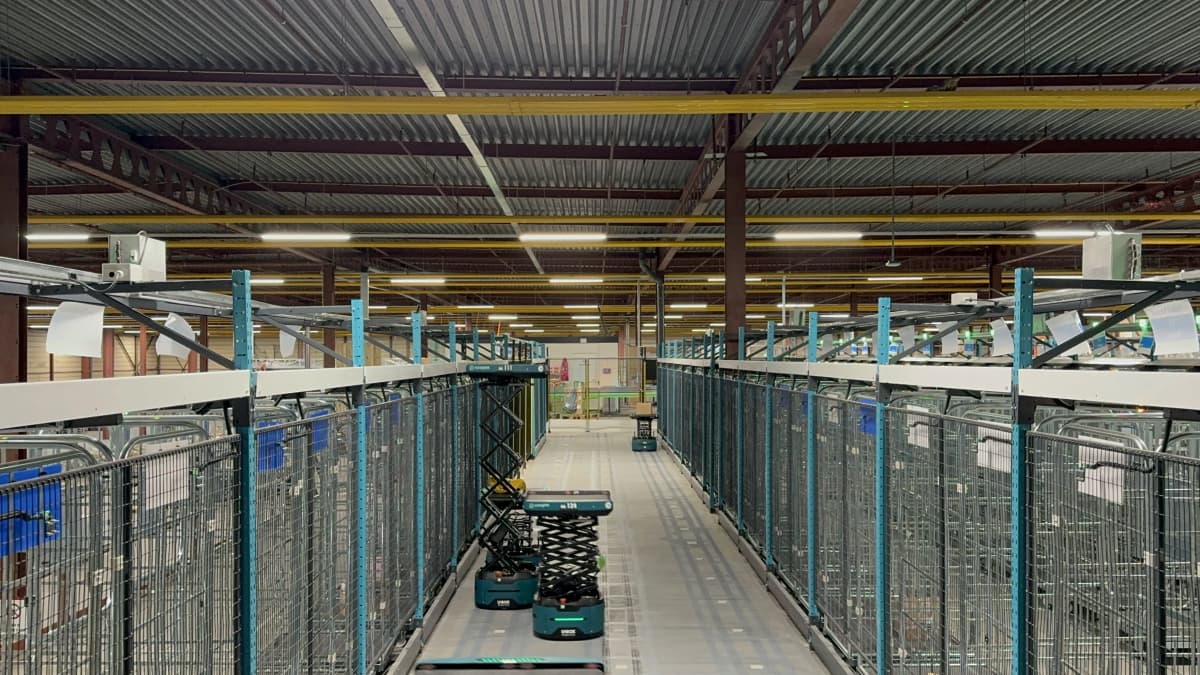
This is exactly where a system like UnboxSort shifts the math. UnboxSort is a modular, AI-powered robotic parcel sortation system built on swarm intelligence. It drops into your existing four walls, goes live in weeks rather than months, and lets you add robots as volume grows. Because it does not need you to pour fixed conveyor infrastructure, the upfront spend and the disruption stay low, and the same footprint handles several times the parcels of a manual line. For teams weighing a heavy conveyor build against something that adapts to the business, modular robotic sortation is usually the lower-risk road to a quick payback.
So the real answer to "how much does warehouse automation cost" is this: figure out the one problem you most need to fix, size it for peak, model the full three-year cost, and favor systems you can start small with and scale. Do that and the question stops being scary and starts being a plan.
FAQ
How much does it cost to automate a warehouse?
Anywhere from about $50,000 for a single robotic cell to $25 million or more for a fully automated distribution center. Most mid-market operations spend $250,000 to $3 million on a meaningful deployment, depending on throughput and scope.
What is the ROI of warehouse automation?
Most projects target payback in 18 to 36 months, driven by lower labor, fewer errors, and stronger peak-season throughput. Sortation and picking usually pay back fastest.
Is warehouse automation worth it for a small or mid-sized operation?
Yes, when it is sized correctly. Modular, scalable systems let smaller operators automate one expensive task first and expand later, which avoids a big upfront bill.
What is the cheapest way to start automating a warehouse?
Start with the most labor-heavy, error-prone task, usually sortation or picking, using modular robotic systems like UnboxSort that scale in steps instead of a full fixed-conveyor build.