
Sortation
From Manual Warehouses to Billion-Dollar Brands: The Supply Chain Automation Playbook
May 01, 2026
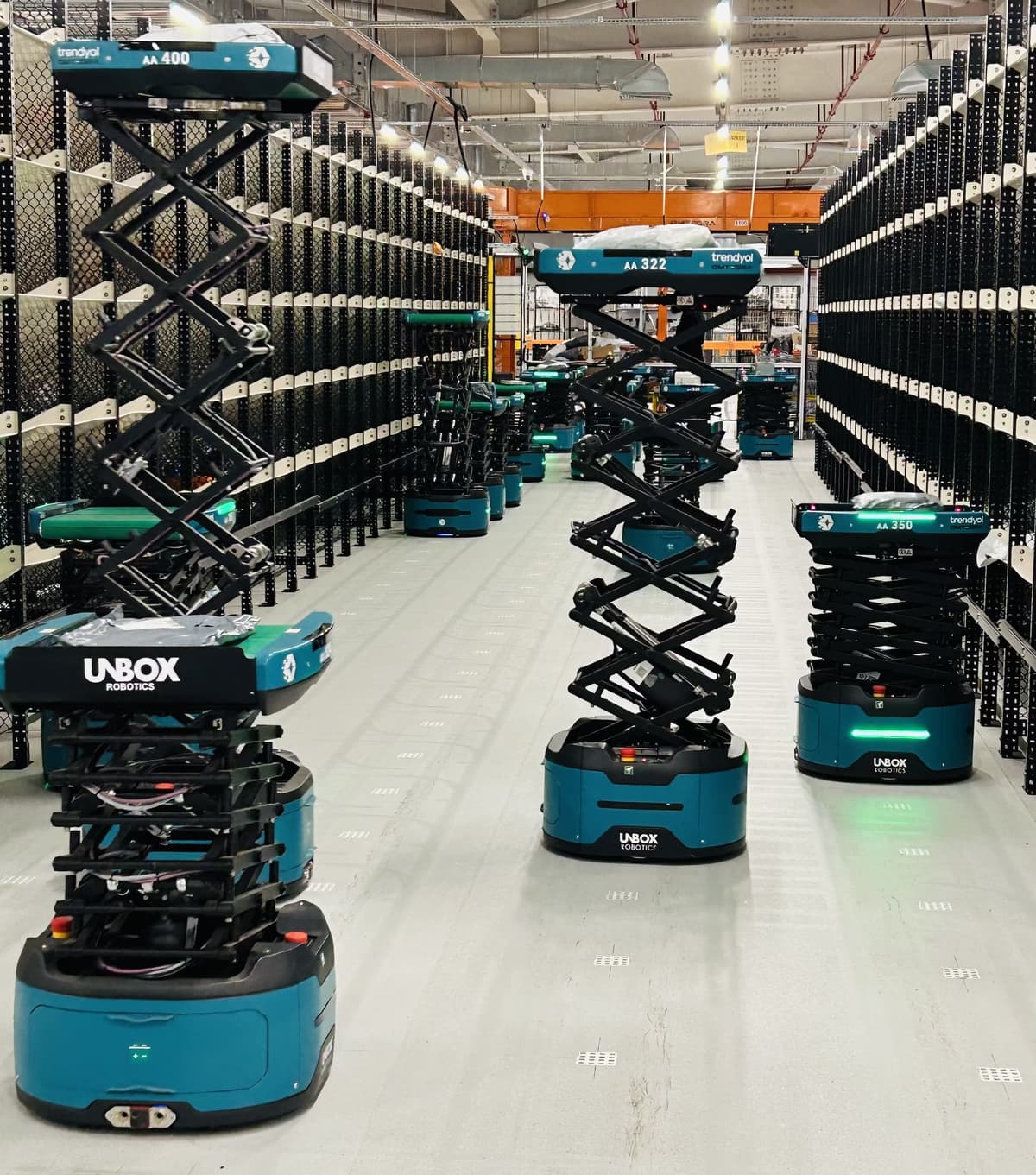
How the brands that dominate today quietly rewired their warehouses before anyone noticed.
Raise your hand if you’ve heard a version of this in a boardroom: “We need to scale. We need to ship faster. We need to cut costs.”
Everyone nods. The meeting ends. And then… nothing changes. The warehouse keeps running the way it did three years ago. Peak season still breaks the same processes.
That’s the story at most companies. But not at the ones that went on to own their categories. At some point, they each looked at their warehouse floor and asked one question that changed everything:
“Does it really have to be this slow?
Amazon: When walking was the bottleneck
In the early 2000s, Amazon’s fulfillment centres worked like everybody else’s. A worker got a pick list, grabbed a cart, and walked. Aisle 14 for a book, aisle 47 for a charger, back to aisle 6 for a bottle. By the end of a shift, the average picker had walked 10 to 15 kilometres. Output? Roughly 200–400 items per hour. For a company processing millions of orders, the maths didn’t work.
The fix was a radical inversion: what if the shelf came to the worker? Amazon bet on mobile robots that slid under shelving units, lifted them, and delivered them to a stationary picker. The worker never moved. The shelves came like a stream. The same picker now handled items three times faster, operating costs dropped 20%, and Amazon didn’t just get faster. It redefined what customers expected from delivery itself.
Zara: When fashion moved faster than the warehouse
Most fashion brands plan six months ahead and pray it sells. Zara threw that playbook out, chasing twenty micro-collections a year instead of two, responding to real-time trends, producing less but producing it fast.
The design team could turn a sketch into a finished garment in days. But then it would sit in the warehouse. Sorting, tagging, routing: all manual in their central hub in Spain. As Zara grew to thousands of stores worldwide, the warehouse became the one thing the brand couldn’t outrun.
So they automated that hub. High-speed carousels processing significant number of garments per hour, automated sorting in a single pass, and tracking chips embedded at the factory. A new design now goes from sketch to store rack anywhere in the world in one week. The industry average? Three to six months. The warehouse didn’t support Zara’s speed. It is the reason Zara is fast.
Ocado: When manual picking couldn’t make grocery profitable
In 2000, a team in London quit their finance careers to reimagine online grocery. Early operations were entirely manual. Workers picking items off shelves, boxing them, loading vans. But grocery is brutal: 50+ items per order, many fragile or frozen, every customer expecting it all together, on time, undamaged.
As volumes grew, the model cracked. Workers couldn’t pick fast enough, errors multiplied, and cost per order stayed stubbornly high. So they built a warehouse from scratch around robotics, a massive grid where hundreds of bots swarm the surface, diving down to retrieve bins, assembling a 50-item order in minutes. Today, their system processes 65 orders per second at 99.5% accuracy with 3x the picking productivity. They proved online grocery could work, but only if you rethought the warehouse entirely.
Walmart: When scale broke the old way
For decades, Walmart’s distribution centres ran on raw effort. Trailer loaders stacked every case, cereal, canned goods, cleaning supplies, floor to ceiling inside a truck, by hand. Eight-hour shifts of lifting, bending, stacking. As e-commerce volumes surged, throughput couldn’t keep pace and labour grew scarce.
Walmart began converting its centres one by one. Robots now handle storage, retrieval, and heavy case movement. Shipping costs dropped 30%, per-unit productivity improved by double digits, and Walmart became the first major retailer to hit a trillion-dollar valuation. The warehouse wasn’t a support function anymore. It was the growth engine.
The pattern is hard to miss
Four industries. Four very different businesses. But the arc is identical: manual processes worked fine until they didn’t. Growth exposed the bottleneck. And the ones who moved first turned the warehouse into a competitive weapon.
Here’s the footnote most people miss: these brands had to build their automation in-house or acquire entire robotics companies to get there. When they needed it most, there simply wasn’t an ROI-driven, deploy-fast robotics partner available. They spent years and hundreds of millions engineering something that wasn’t even their core business.
That’s no longer the case.
Unbox Robotics exists so you don’t have to build your own robotics division to compete with the giants. Our AI-powered swarm robotics deploy in under two weeks, scale with your demand, and deliver 3–5x productivity gains, without ripping out your existing setup. The warehouse revolution that took these brands years and billions? You can start yours in days.

The only question is the same one they all faced: does it really have to be this slow?