
Automation
Best Robotics Innovations Transforming Global Warehousing in 2026
August 13, 2026
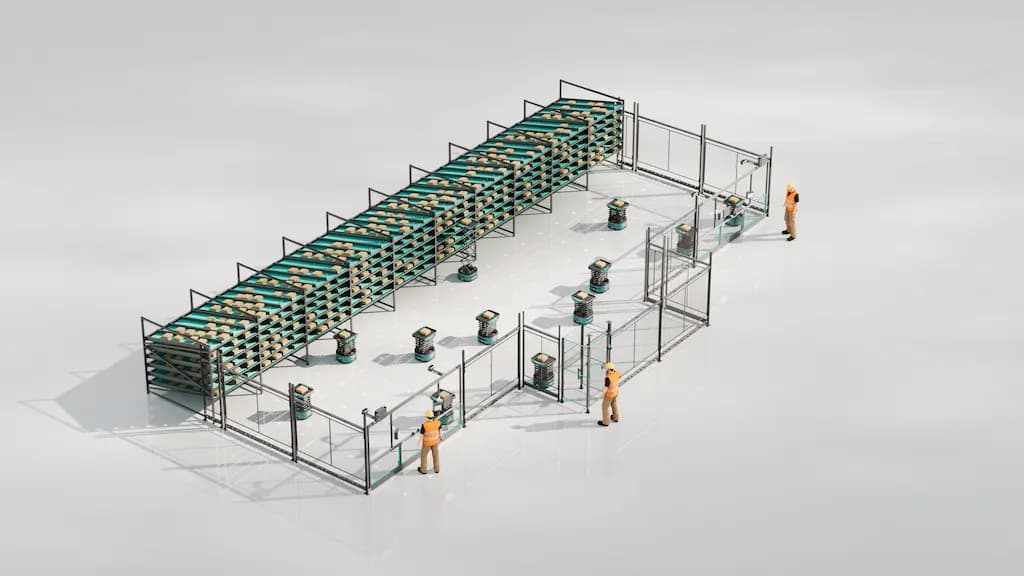
The warehouse of 2026 looks nothing like it did even three years ago. Rising e-commerce volumes, shrinking delivery windows, and relentless pressure on operating margins have pushed logistics leaders to rethink every square foot of their facilities. At the center of this transformation sits a new generation of robotics that is smarter, faster, and more collaborative than anything the industry has seen before.
From pick-and-pack to parcel induction, from pallet movement to last-mile sorting, robots are moving from the fringes of the warehouse toward its core. Adoption is still early. Analysts estimate that only a modest share of warehouses run fulfillment robots today, but buyer intent is overwhelming: in recent industry surveys, the large majority of operators expect to deploy robotics within five years[1]. If you run a DC, a hub, or a 3PL network, understanding these innovations is no longer optional. It increasingly separates the operators who scale profitably from those who fall behind.Here are the most important robotics innovations reshaping global warehousing this year.
1. Mobile Robotic Sorting Solutions
One of the biggest leaps of 2026 is the shift from linear, conveyor-based sortation to mobile robotic sorting. Instead of a single, rigid piece of infrastructure handling every parcel, dozens (sometimes hundreds) of compact sorting robots move in coordinated fleets, dynamically routing packages to the right chute, cart, or dock door.
The advantages are hard to ignore. In real deployments, mobile robotic sortation can deliver two to three times the throughput per square foot of the infrastructure it replaces. It recovers from disruption almost instantly, since a single robot failing is not a system failure, and it scales horizontally simply by adding more bots to the fleet. Those gains depend on product mix and layout rather than being a fixed guarantee, and the highest-volume operations running stable SKUs may still lean on traditional high-speed unit sorters for raw peak throughput. But for operators facing unpredictable peaks and mixed profiles, this elasticity is transformative.
2. AI-Powered Robotic Sorters for Mixed-SKU Environments
Modern warehouses no longer handle uniform boxes. They handle poly bags, tubes, flats, fragile items, and irregular parcels, often on the same line. The latest robotic sorter platforms use AI-driven vision, multi-modal sensors, and real-time dimensioning to sort this mix without human intervention.
These systems let a single bot sort objects autonomously across dozens of SKU categories, destinations, and service levels at once. And because the models learn from every parcel, accuracy improves over time, steadily reducing the exceptions that bog down manual sort lines.
3. Mobile Robots (AMRs/AGVs) for Goods-to-Person Picking
Mobile Robots have matured from niche pilots into mainstream warehouse infrastructure. Because walking accounts for an estimated 50 to 70 percent of a manual picker’s shift[4], goods-to-person systems, which bring inventory to a stationary picker rather than sending the picker to the inventory, can lift picking throughput by roughly three times[5]. In 2026, the most advanced fleets pair goods-to-person picking with dynamic slotting, letting the system continuously decide which inventory should sit closest to the pick stations based on live demand signals.
The result is a sharp reduction in walking time, higher picker productivity, and a facility that effectively re-optimizes itself shift after shift. Dynamic slotting is still maturing relative to goods-to-person picking itself, but for omnichannel retailers juggling store replenishment, e-commerce, and B2B orders from a single DC, the combination is a genuine step change.
4. Robotic Arms with Adaptive Grasping
Piece-picking robots have been promised for a decade. In 2026, they are finally earning their place on the floor. Adaptive grasping, powered by tactile sensors, suction-and-finger hybrid grippers, and AI models trained on enormous real-world manipulation datasets[7], lets robotic arms handle much of the long tail of SKUs that used to require a human touch. Leading systems can now sustain several hundred picks per hour at grasp-success rates above 99 percent, without needing a 3D model of every item in advance[6].
Paired with sortation robots on the induction side, these arms move fulfillment closer to fully automated operation for well-defined order profiles. The technology is deployed and improving fast, though truly "lights-out" fulfillment remains aspirational. Deformable, transparent, and tangled items still trip up even the best systems, so human exception handling stays part of the picture for now.
5. Last-Mile Sorting and Distribution Center Automation
The last mile is the most expensive, most time-sensitive, and most visible part of the supply chain. It is also where robotic sorting is driving some of the largest ROI gains of 2026.
Modern last-mile and distribution facilities are moving away from static put walls toward compact, robot-driven sortation cells that process thousands of parcels per hour in a fraction of the space. These cells slot directly into urban micro-fulfillment centers and dark stores, one of the fastest-growing segments in logistics[8], bringing same-day and next-day delivery economics within reach for far more operators than a year ago.

6. Digital Twins and Predictive Orchestration
Hardware is only half the story. A growing edge belongs to operators who pair their robots with digital twins, which are live, simulated models of the facility used to test scenarios before they play out on the floor.
Today these twins are firmly established for designing layouts and for training and validating robot fleets before deployment. Amazon, KION, and others build them on platforms like NVIDIA Omniverse to compress development cycles from years to months[10]. The frontier now is extending them into live orchestration: telling sortation robots where to stage, when to charge, and how to rebalance workloads before bottlenecks form, and flagging maintenance windows before failures occur. This real-time orchestration layer is emerging rather than universal, but it is where the most sophisticated operators are heading.
7. Interoperable Fleets and Open Standards
For years, multi-vendor robotics meant integration headaches. That is changing, at least for mobile robots. Open standards like VDA 5050 (now at version 2.1, which defines how a central fleet manager commands mobile robots from different vendors)[11][12] and the MassRobotics AMR Interoperability Standard (which lets robots and software share status and location data across vendors)[13] are pushing warehouses toward genuinely interoperable mobile-robot fleets.
It is worth being precise about scope. These standards cover autonomous mobile robots and AGVs, not sorting robots or robotic arms, which are still integrated through warehouse-execution software and vendor APIs. Adoption is also regional and still maturing. But the direction is clear, and for operators it means more freedom of choice, better pricing leverage, and the ability to deploy the best tool for each task instead of being locked into a single ecosystem.
8. Sustainable, Energy-Smart Robotics
Sustainability has moved from marketing claim to procurement requirement. Because mobile sortation robots draw power only when they move, rather than running a drive train continuously the way a fixed conveyor does, they can consume dramatically less energy at comparable volumes. Regenerative braking, now standard across electric material-handling equipment, trims consumption further, and the shift to lithium iron phosphate (LFP) batteries brings longer service life and tolerance for fast, frequent opportunity charging, with a modest energy-density trade-off[15].
Combined with the smaller physical footprint of robotic sortation, this translates into lower HVAC and lighting loads and smaller buildings, and therefore a measurable reduction in Scope 2 emissions from purchased electricity, plus some Scope 1 reduction wherever a smaller building burns less on-site fuel for heating[16][17]. For many operators, that is enough to move the needle on corporate ESG targets.
Why This Matters Now
The common thread across all eight innovations is the same: robotic sorting is shifting from a capital expense you justify multi-year ROI model to the operating layer of a competitive DC. Facilities that still rely on manual sort lines, rigid conveyors, or single-function robots are fighting an uphill battle on cost-per-parcel, speed-to-customer, and labor availability.
The good news is that deploying these systems has never been faster. Modular, mobile, and software-defined robotic sorting solutions can go live in weeks rather than quarters, and scale up or down as your volumes shift.
The Road Ahead
The operators who embrace mobile sortation robots, AI-driven robotic sorters, and intelligent orchestration will set the pace for the rest of the decade. Those who wait may find themselves buying catch-up capacity at a premium.
At Unbox Robotics, we are building for exactly this moment, with purpose-built robotic sortation that slots into your existing facility, turns flat floor space into high-throughput sorting capacity, and scales with your business. If you are ready to see what modern robotic sorting looks like in action, our team is ready to show you.
The future of warehousing is autonomous, adaptive, and already taking shape. The only question is how quickly you want to move.