
Sortation
Best Autonomous Sorting Solution for Modern Fulfillment Centers
August 17, 2026
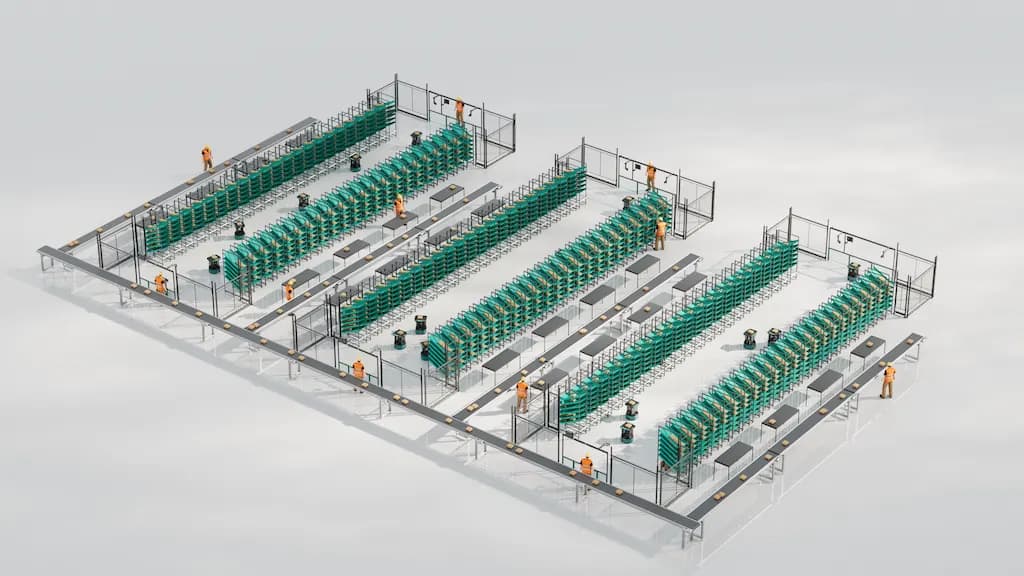
Fulfillment has quietly become the most competitive layer of the supply chain. Customers no longer compare brands on product alone, they compare them on delivery promises. And every delivery promise, whether it is two-hour, same-day, or next-day, is won or lost inside the four walls of the fulfillment center. At the heart of that building sits one critical process: sortation.
The question facing operations leaders in 2026 is no longer whether to automate sortation. It is how to choose the right autonomous sorting solution. With a crowded market, long vendor lists, and very different underlying technologies, picking the wrong system can lock a business into years of underperformance. Picking the right one can unlock throughput, accuracy, and cost-per-parcel numbers that transform the P&L.
This guide walks through what truly separates the best autonomous sorting solutions from the rest, and what fulfillment leaders should look for before signing a contract.
What "Autonomous Sortation" Really Means Today
A quick clarification is useful. Traditional sorters, such as cross-belts, tilt-trays, and sliding shoe systems, are automated but not autonomous. They execute a fixed physical path. True robotic sortation uses a fleet of intelligent, self-driving bots that make independent routing decisions in real time. These sortation robots do not rely on a single conveyor line. They rely on software, sensors, and coordinated movement.
The practical difference shows up everywhere. A conveyor sorter breaks, the line stops. A robotic sorting fleet keeps working even if several units are offline. A conveyor sorter needs civil work and months of shutdown to expand. A robotic sorter fleet can be scaled by adding bots over a weekend.
For any modern fulfillment center dealing with volatile volumes and a growing SKU tail, that operational difference is decisive.
Seven Capabilities That Define the Best Autonomous Sorting Solution
When operators evaluate vendors, most demos look impressive. The real differentiation comes from digging into capabilities that show up only under real-world load.
1. True Autonomy at the Parcel Level
The best systems let every bot sort objects autonomously without central bottlenecks. Each robot senses its environment, negotiates paths with other bots, and decides where to drop its parcel based on live data. If a destination chute is full, the fleet reroutes automatically. This is a very different architecture from "automated" systems that still depend on a rigid central script.
2. SKU Agnostic Handling
Fulfillment centers today process polybags, small boxes, jiffy mailers, tubes, fragile items, and everything in between. A high-quality robotic sorter handles this mix without manual pre-sorting, special induction lanes, or custom trays. Ask any vendor to demonstrate with your actual parcel profile, not theirs.
3. Deployment Speed and Modularity
Legacy sortation installs take six to twelve months. Best-in-class robotic sorting solutions go live in four to eight weeks because they do not require mezzanines, pits, or heavy structural work. The fleet lands on a flat floor, gets commissioned, and ramps up in parallel with live operations. For peak-driven businesses, this speed is often more valuable than any single efficiency metric.
4. Footprint Efficiency
Per square meter throughput is where robotic sortation quietly wins. Compact fleets pack more sort destinations into the same floor area, which is especially valuable in urban fulfillment nodes and last mile sorting and distribution center facilities where real estate is brutally expensive. The best platforms deliver two to three times the throughput of a traditional sorter in the same space.
5. Orchestration Intelligence
A fleet of sorting robots is only as good as the software that runs it. Look for a warehouse execution layer that supports live reslotting, dynamic wave management, predictive charging, and exception handling. Ask the vendor how the system behaves when a component fails mid-shift, when a single bot or module drops out. On a conventional sorter, one failed module can halt the entire line; a well-orchestrated robotic fleet should route around the loss and keep sorting. That answer tells you more than any brochure.
6. Accuracy and Traceability
Sortation errors cascade into missed SLAs, customer complaints, and reverse logistics costs. Top robotic sorting platforms deliver 100 percent sort accuracy with full parcel-level traceability. Every scan, route, and drop should be logged and auditable in real time.
7. Flexibility Across Use Cases
A fulfillment center rarely stays static. The same facility may serve D2C parcels, B2B cartons, returns, and store replenishment within a single year. The best robot sorting platforms handle all of these without hardware changes. Software reconfiguration replaces physical re-engineering.
The Fulfillment Economics Behind the Shift
The business case for autonomous sortation has moved from "nice to have" to "strategic necessity" for three reasons.
Labor is the first. Sort operations are among the hardest roles to staff, especially at peak. Autonomous systems remove the dependency on seasonal hiring surges and reduce safety incidents in the process.
Real estate is the second. As fulfillment networks push closer to the customer, warehouse footprints shrink. A compact sorting robot fleet makes it possible to run a high-throughput operation out of a 30,000 square foot urban building, something traditional sorters simply cannot match.
Service levels are the third. Same-day and next-day delivery are no longer premium offerings. They are baseline customer expectations. Meeting them requires sort cycles measured in minutes, not hours, which only a robotic sortation model can sustainably deliver.
A Fit-for-Purpose Checklist for Operations Leaders
Before committing to any autonomous sorting solution, pressure test these points with every vendor on your shortlist.
Ask how the system performs on day one of peak season, not in a clean pilot. Ask for live reference sites that match your parcel mix and volume profile. Ask how quickly the system scales if your volumes double. Ask what happens when the conveyor module/robot stops for 3 min in a cycle or a part breakdown happens. Ask for the total cost of ownership over five years, including software, spares, and energy. Ask how the platform integrates with your existing WMS and parcel carriers.
Vendors who answer confidently, with data, are the ones worth your time.

Where Unbox Robotics Fits In
Unbox Robotics was built from day one around the belief that fulfillment centers deserve sortation that is fast to deploy, flexible to run, and economical to scale. Our platform delivers high-density robotic sorting in a fraction of the footprint, handles mixed SKU profiles out of the box, and slots into live operations without disruptive civil work.
For fulfillment leaders looking to move from reactive automation to a sortation layer that actually advances the business, we are ready to show you what a modern deployment looks like.
The best autonomous sorting solution is not the one with the flashiest demo. It is the one that keeps performing on the toughest day of the year, and keeps evolving with the business beyond it.